 An implement of Operative Masonry, The trowel was adopted by Speculative Freemasons as the peculiar working-tool of the Master’s Degree. By this implement, along with its use in Operative Masonry to spread the cement which binds all of the parts of the building into one common mass, we are taught to spread the cement of affection and kindness, which unites every one of the members of the Masonic family, wheresoever dispersed over the globe, into one companionship of Brotherly Love and an old custom inside an Oxford Lodge, England, gave it prominence to become a jewel, and as a sign it goes back to the practice of the Ancient. Today this implement is known to be the appropriate working-tool of the Master Mason, because, in Operative Masonry, while the Apprentice is engaged in preparing the rude materials, which require only the Gage and Gavel to give them their proper shape. the Fellow Craft places them in the proper position utilizing the Plumb, Level, and Square; but the Master Mason alone, having examined their correctness and proved them true and trusty, secures them permanently in their place by spreading, with the trowel, the cement that irrevocably binds them together. The Trowel has also been adopted as the jewel of the Select Master. But its uses in this Degree are certainly not symbolical. They are simply linked with the historical legend of the Degree. The Masonic Trowel as well as the Masonic Plumb are foiund on most Masonic Rings.
Contact us at:
712-239-6155
Masonic Jewels
Masonic Jewels by Fox Jewelry. Fox Jewelry wants to be your “Go To” supplier for the Masonic Jewels required by your lodge, temple, consistory or other Masonic organization. Fox Jewelry offers its Masonic Jewels made in either all 10KT yellow gold or sterling silver coated with Vermeil. For those of you not familiar with Vermeil, Fox Jewelry makes its Masonic Jewels by utilizing a base of sterling silver and then the Masonic Jewel is coated with either 24KT or 14KT gold. To be considered vermeil, the gold must also be at least 1.5 micrometers thick. The procedure has proved to be a very cost efficient and efficient way to produce an outstanding looking Masonic Jewel. It is also a procedure that produces a jewel that has a very durable and long lasting finish. We produce many styles of Masonic Jewels; the Past Master Breast Jewel, Past Eminent Commander Jewel, Eastern Star Breast Jewel, and the Select Master Jewel just to name a few. Jewels for your organization ca
http://onlywire.com/r/72423098
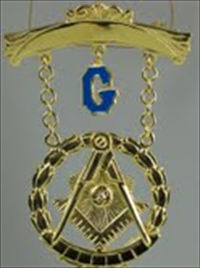
Masonic Past Master Breast Jewel
Masonic Jewels by Fox Jewelry. Fox Jewelry wants to be your “Go To” supplier for the Masonic Jewels required by your lodge, temple, consistory or other Masonic organization. Fox Jewelry offers its Masonic Jewels made in either all 10KT yellow gold or sterling silver coated with Vermeil. For those of you not familiar with Vermeil, Fox Jewelry makes its Masonic Jewels by utilizing a base of sterling silver and then the Masonic Jewel is coated with either 24KT or 14KT gold. To be considered vermeil, the gold must also be at least 1.5 micrometers thick. The procedure has proved to be a very cost efficient and efficient way to produce an outstanding looking Masonic Jewel. It is also a procedure that produces a jewel that has a very durable and long lasting finish. We produce many styles of Masonic Jewels; the Past Master Breast Jewel, Past Eminent Commander Jewel, Eastern Star Breast Jewel, and the Select Master Jewel just to name a few. Jewels for your organization can be purchased one at a time or contact Fox Jewelry for pricing on the purchase of several jewels at one time.
As stated earlier, Fox Jewelry wants to be your supplier of the Masonic Jewels required by your organization. For pricing on Masonic Jewels, please contact us at:
or call: 712-239-6155
www.facebook.com/masonicringsbyfox
Follow us on Twitter: @MasonicRings
www.foxjewelry.net
http://www.masonicjewelryblog.net
www.facebook.com/masonicringsbyfox
Follow us on Twitter: @MasonicRings
www.foxjewelry.net
Is the Seal of the United States a Masonic Symbol?
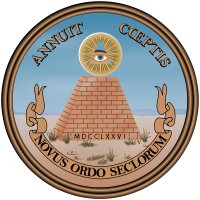
Could the official Seal of the United States be a Masonic symbol? The Great Seal of the United States is not a Masonic emblem, nor does it contain hidden Masonic symbols. The particulars are there anyone to check, who’s willing to have faith in historical fact, instead of historical fiction. Benjamin Franklin was the only Mason on the first design committee of the Great Seal, and his suggestions had no Masonic content. Not one of the final designers of the seal was Masons. The interpretation of the eye on the seal is subtly separate from the interpretation utilized by Masons. The eye in the pyramids not nor has it ever been a Masonic symbol. On Independence Day, 1776 a committee was created to develop a seal for the new American nation. The committee’s members were Benjamin Franklin, Thomas Jefferson, and John Adams, with Pierre Du Simitiere as artist and consultant. Out of the four men involved, only Benjamin Franklin was a Mason, and he contributed nothing of a Masonic nature to the committee’s proposed design for a seal. Du Simitiere, the committee’s consultant and a non-Mason, contributed several major design features that made their way directly into ultimate design of the seal: ‘the shield, E Pluribus Unum, MDCCLXXVI, as well as the eye of providence inside a triangle. The eye of providence on the seal thus can be traced, not to the Masons, but to a non-Mason consultant on the committee.”The single eye was a well-established artistic convention during the Renaissance period. Du Simitiere, who suggested using the symbol, collected art books and was familiar with the artistic and ornamental devices used in Renaissance art. This was the same cultural iconography that eventually led Masons to include the all-seeing eye in their symbols. After being presented to Congress for their approval, Congress declined the suggestions of the design committee. Francis Hopkinson, a consultant to the committee, had several ideas that eventually made it into the seal: “white and red stripes with- in a blue background for the shield, a radiant constellation of thirteen stars, and an olive branch. Hopkinson’s greatest contribution to the current seal came from his layout of a 1778 50-dollar colonial note wherein he used an unfinished pyramid throughout the design. In 1782 the committee finally produced a design that finally satisfied Congress. Charles Thomson, Secretary of Congress, and William Barton, artist and consultant, borrowed from earlier designs and sketched what at length became the United States Seal. Interpreting the Symbol, the “Remarks and Explanations” of Thomson and Barton are the only explanation of the symbols’ meaning. Despite what anti-Masons may believe, there’s no reason to doubt the interpretation accepted by the Congress. The Pyramid signified Strength and Duration: The Eye over it & the Motto allude to the many signal interpositions of providence in favor of the American cause. The committees and consultants who designed the great Seal of the United States contained only one Mason, Benjamin Franklin. The only possible Masonic design element among the very many on the seal is the eye of providence, and the interpretation of it by the designers is different from that used by Masons. The eye on the seal represents an active intervention of God in the affairs of men, while the Masonic symbol stands for a passive awareness by God of the activities of men. The first “official” use and definition of the all-seeing eye as a Masonic symbol seems to have come in 1797; 14 years after Congress adopted the design for the seal. The Eye in the Pyramid of the all-seeing eye thus appears to be a rather recent addition to Masonic symbolism. It’s not discovered any of the Gothic Constitutions, written from about 1390 to 1730. The eye — sometimes in a triangle, sometimes in clouds, but nearly always surrounded by a glory — became a popular Masonic decorative device in the latter half of the 18th century. Its use as a design element seems to have been an artistic representation of the omniscience of God, rather than some generally accepted Masonic symbol. Its meaning in all cases, however, was that commonly given it by society at large — a reminder of the constant presence of God. The eye of Providence was part of the common cultural iconography of the 17th and 18th centuries. When placed in a triangle, the eye went beyond a general representation of God to a strongly Trinitarian statement. It was during this period that Masonic ritual and symbolism evolved; and it is not surprising that many symbols common to and understood by the general society made their way into Masonic ceremonies. Masons may have preferred the triangle because of the frequent use of the number 3 in their ceremonies: three degrees, three original grand masters, three principal officers, and so on. Eventually the all-seeing eye came to be used officially by Masons as a symbol for God, though this happened towards the end of the eighteenth century, after congress had adopted the seal. A pyramid, whether incomplete or finished, however, has never been a Masonic symbol. It has no generally accepted symbolic meaning, except perhaps permanence or mystery. The combining of the eye of providence overlooking an unfinished pyramid is a uniquely American, not Masonic, icon, and must be interpreted as its designers intended. It holds no Masonic context.
Conclusion:
It’s hard to know what leads some to see Masonic conspiracies behind world events but its value has been misinterpreted. The Great Seal of the United States is a classic example of such a misinterpretation, and some Masons are as guilty of the exaggeration as many anti-Masons. The Great Seal and Masonic symbolism grew from the same cultural milieu. While the all-seeing eye had been popularized in Masonic designs of the late eighteenth century, it did not achieve any sort of official recognition until 1797. Whatever status the symbol can have had during the design of the Great Seal, it was not adopted or approved or any Grand Lodge. The seal’s Eye of Providence and the Mason’s All Seeing Eye each express Divine Omnipotence, though they parallel uses of the shared icon, not really a single symbol.
- Is the Seal of the United States a Masonic symbol?
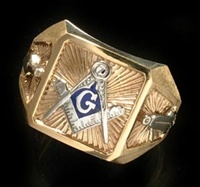
Masonic Ring, the all-telling sign of the Freemason. The Masonic Ring is the sign of Freemasons all over the world. Typically shown with the Compass and Square on the top of the Masonic Ring and the Plumb and Trowel on the sides of the shank of the Masonic Ring, the ring is normally worn on the third index finger next to the pinky finger on the right hand. There are several different opinions as to whether the points of the compass on the Masonic Ring should point toward or away from the wearer’s body. As of this date, the Grand Lodges have not made any rulings on this subject. Take one viewpoint for example. If you were to hang the American Flag, would you hang it with the stars at the bottom or top of the flag? Obviously you would fly the flag with the stars on top; therefore, the wearer of the Masonic Ring should wear the ring with the points of the compass and square pointing toward the wearer. Another viewpoint is that when the emblem of the Compass and square is displayed on a
http://www.masonicjewelryblog.net/
www.facebook.com/masonicringsbyfox
Follow us on Twitter: @MasonicRings
www.foxjewelry.net
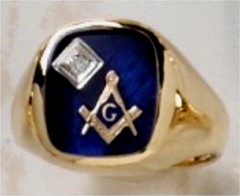 Masonic Ring, the all-telling sign of the Freemason. The Masonic Ring is the sign of Freemasons all over the world. Typically shown with the Compass and Square on the top of the Masonic Ring and the Plumb and Trowel on the sides of the shank of the Masonic Ring, the ring is normally worn on the third index finger next to the pinky finger on the right hand. There are several different opinions as to whether the points of the compass on the Masonic Ring should point toward or away from the wearer’s body. As of this date, the Grand Lodges have not made any rulings on this subject. Take one viewpoint for example. If you were to hang the American Flag, would you hang it with the stars at the bottom or top of the flag? Obviously you would fly the flag with the stars on top; therefore, the wearer of the Masonic Ring should wear the ring with the points of the compass and square pointing toward the wearer. Another viewpoint is that when the emblem of the Compass and square is displayed on a building or a pennant, the normal customer would be that the points of the compass would point downward. When displayed on the Altar, the points of the compass and square point away from the Master. As the Master from his station views the compass from the Altar of his lodge, the points are from, not towards him. As the wearer of a compass watch charm views it, the points are down and away from his eyes. In a similar way, as the Mason views the emblem on his Masonic Ring, the points should be down or away from his eyes. The square is the symbol of earthly things and the compass of heavenly perfection. As a combined emblem, the ends of the square point up as a symbol of man’s aspirations toward God; the points of the compass are down to represent heavenly qualities coming down from God to earth; therefore it would seem that the proper way to wear the Masonic Ring would be that is which its symbolism is best expressed; namely, that in which, when the hand is held in its usual position, the points of the compass of the Masonic Ring are towards the earth and away from the wearer’s eyes.
Contact Us:
Fox Jewelry
3821 Chippewa CT
Sioux City IA.51104
712.239.6155
Who Is Prince Hall
http://foxjewelry.net.co/Prince_Hall_Masons/t49/articles.html?osCsid=62769f081351222c3871582e8cdd2a9e
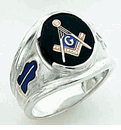 Fox Jewelry offers Alternatives to Gold Masonic Rings. Check out their gold plated Masonic Rings as well as their sterling silver Masonic Rings and their stainless steel Masonic Rings.